Eva Leaves Home After Discovering She Is Pregnant
Nieuwe burenEva’s departure after discovering her pregnancy turns a private test into a decisive break with her marriage and home. The two blue lines on a Predictor pregnancy test give her a reason to leave, but also a new responsibility: she resolves that this child will live, even if she must face the future alone. What begins as a quiet moment in a school toilet ends with Eva locking the front door of Melkweg 1 behind her and driving away from Peter.
Background: A home burdened by loss
The move to Melkweg 1 had been planned around a future that never arrived. Eva and Peter chose the new house in De Zonnepolder for the life they imagined for Lieve: a child could grow up among the homes of the Vinex neighborhood, cycle to school, and play on the planned square. But Lieve died, and the house became inseparable from that loss. Peter had spent evenings and weekends finishing it, laying the floors and tiles and creating the nursery beneath the roof window as a computer room. The family and friends who might have shared their pride in the home had barely seen it; Eva herself had not visited for more than six months.
When the house was ready, the neighborhood was still a muddy construction site, its roads unfinished and its promised architectural variety difficult to find among the blocks of concrete. The intended family home therefore arrived already shadowed by grief and disappointment. Later, Peter experiences its interior as oppressive and believes that the house and the surrounding development have brought misfortune. Eva’s departure makes the home’s failure more than architectural: it is also the setting of a marriage she can no longer bear to inhabit.
The test and the decision
At school, Eva meets Rebecca in the teachers’ toilet, where the two lock the door. Rebecca looks worn out as Eva takes the pregnancy test from her bag. Eva does not need the instructions: she has taken the test many times before and knows how to use the stick. The familiar procedure does not make this result ordinary. While the minute passes, small details—the running water, Rebecca arranging her hair, Sem smearing softened biscuit over himself in his buggy—continue around the possibility that Eva’s life is about to change.
The test shows two blue lines. Rebecca embraces Eva and congratulates her, while Eva stands almost rigid in her arms, overwhelmed by happiness and fear at once. She bends to lift Sem from his buggy when he protests, and Rebecca takes him back to soothe him. Rebecca proposes waiting seven weeks before telling the men. Eva cannot accept the delay: to her, the pregnancy changes everything now. She asks Rebecca to leave with her and raise Sem and the unborn child somewhere safer, perhaps in France, Spain, or farther away.
Rebecca refuses to leave Steef. She argues that the child needs a father and a brother, and that leaving with Sem would amount to taking him away; she also fears that Steef would find them wherever they went. Eva insists that she will go alone. She has spent long enough unhappy and sees the pregnancy as a reason to choose herself at last. Her resolve is bound up with Lieve’s death: she is certain the new child will live, and imagines a life in which the baby can grow freely, surrounded by love.
Packing and leaving Peter
Eva spends the remainder of the school day in a daze. At home, with more than two hours before Peter is due back, she takes a large travel bag from the attic and fills it with clothes, books, her passport and driving licence, music CDs, bank statements, and a credit card. She also packs the framed photograph of Lieve, a lock of her hair, and the knitted sweater Eva’s mother made for her. These keepsakes make clear that leaving does not mean abandoning the child she lost. Eva takes vitamins and chamomile tea, and retrieves the car documents from Peter’s desk drawer.
Searching through Peter’s belongings, Eva cries—not from love or grief, but from pity for the pain she knows her departure will cause. She understands that leaving is Peter’s worst nightmare and that he may never recover from what she is doing to him. She writes that she is sorry, cannot do otherwise, and hopes he will one day forgive her and find happiness with someone who can give him the love he deserves. The note cannot soften the act, but it records her awareness of its cost to him.
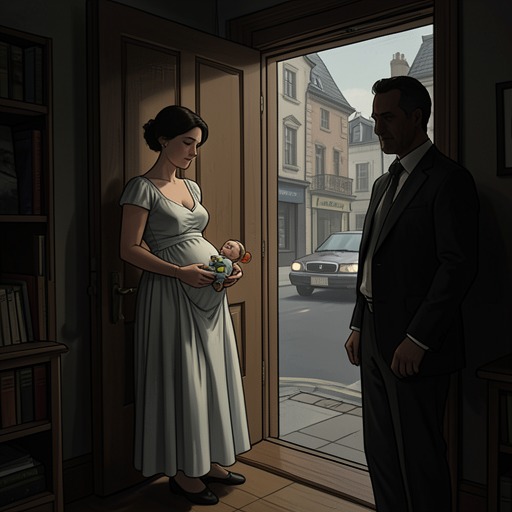
Eva shuts the door, locks it, and drops the key through the letterbox, making her return inside physically impossible. As she drives away from the bare, monotonous street, she rejects the idea that leaving is cowardice. In her view, cowardice would have been staying and sacrificing her life to Peter’s well-being through endless compromise. She has no destination secured, only the conviction that she will have the child, a need for shelter and work, and a longing for sun. The decision is both an escape from the marriage and a declaration that the pregnancy will not be surrendered to the life she is leaving.
The road south
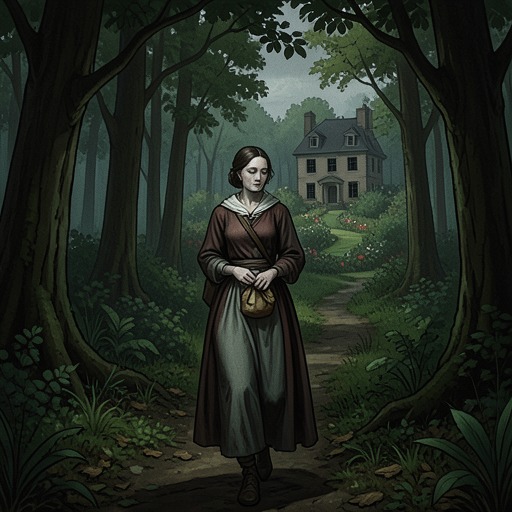
On the road, Eva is unexpectedly calm. She has spent years anxious about hurting Peter, disappointing her family, or being left alone; now, despite having overturned her life, she feels relief. She believes the baby is a girl, though she cannot explain her certainty. The possibility recalls Lieve: Eva hopes for a second Lieve, a second chance, while recognizing that another girl might remind her of the daughter who died. She imagines raising this child on her own and having her entirely to herself.
Traffic moves slowly past Utrecht toward Den Bosch. Tired and hungry, Eva studies a map and considers driving through Eindhoven toward Maastricht, perhaps crossing into Belgium for the night; because she is pregnant, she knows she needs rest and proper food rather than simply driving through the night. Near Eindhoven, she turns toward Valkenswaard, where a memory of a childhood camping trip gives the journey a brief holiday feeling. The actual town disappoints that memory: its square is a car park, and its cafés and snack bars line an ordinary road. At De Rooie Sok she drinks cola, and a bartender directs her toward a nearby hotel. Eva explains that she is not looking for nightlife.
By the time she reaches De Kempervennen, she has received repeated calls from Peter, Rebecca, and her sister. She calls her sister back as promised and says that she is safe, but asks her to stop lecturing and to look after Peter. She then calls Rebecca. The contrast between the calls and Eva’s chosen destination marks the limits of her flight: she has left her home and husband, but she is still negotiating what contact, care, and responsibility will mean from a distance.